Local guide / Boise, ID
Frozen Pipes and Sprinkler Lines in the Treasure Valley
A lot of winter water damage around Boise starts with a sprinkler line or hose bib that never got drained in October.
Free to call. Lines open 24 hours.
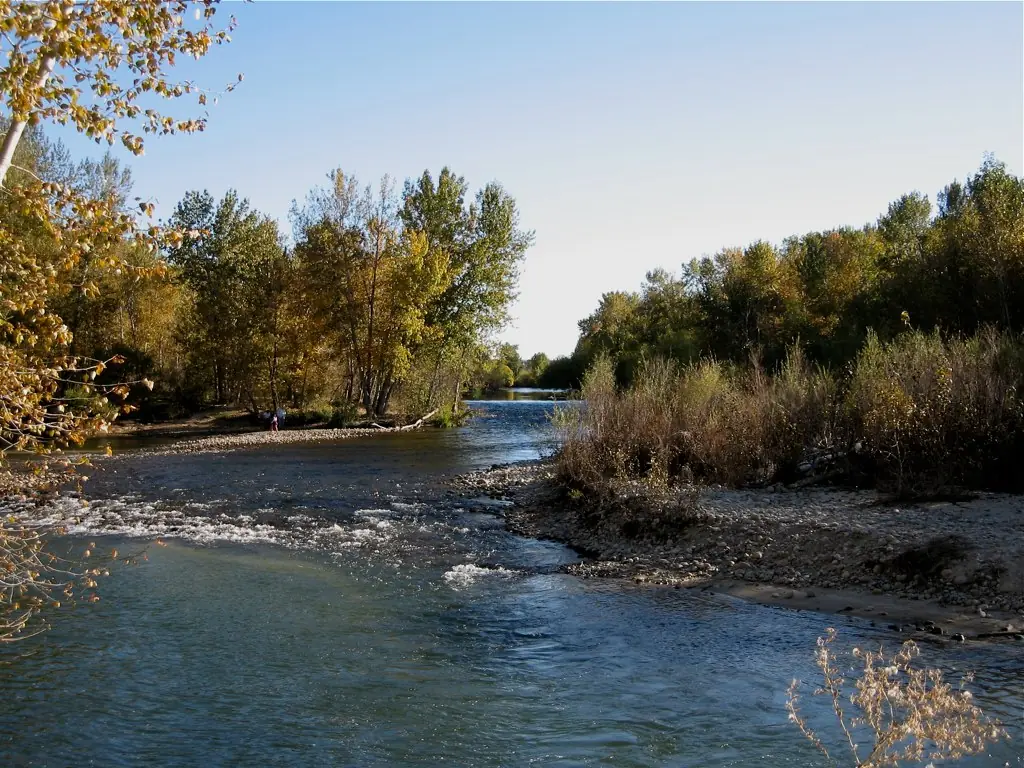
Photo: Boise River Greenbelt Fall 2011 - 01 by elmar88, CC BY 2.0
Why October matters here
Many Treasure Valley homes have two water systems: drinking water inside, and pressurized irrigation for the lawn. The irrigation water comes from canals and districts, and it shuts off every fall.
The City of Meridian says its pressurized irrigation season runs from about April to October depending on the year. It warns that sprinkler pipes and backflow assemblies can freeze and break once temperatures drop below 32 degrees, and recommends blowing out sprinklers and winterizing the backflow before October 31 to be safe.
In Boise, the City runs pressure irrigation in only 14 subdivisions. Everyone else gets irrigation water through a local irrigation district, and the season schedule is set by the Boise Project Board of Control. If you are in a City-run subdivision, the City's pressure irrigation line is (208) 608-7150, weekdays 8 a.m. to 5 p.m.
Blowing out the sprinklers
The American Red Cross advises draining water from sprinkler supply lines following the manufacturer's or installer's directions. In practice most homeowners hire a landscaper or irrigation company to blow the lines out with compressed air.
A few things to sort out before that happens:
- Know which valve is yours. The City of Nampa has asked customers and landscapers not to operate city irrigation valves when blowing out sprinkler lines, including ones that sit on private property. If you are not sure which valve is the city's, call your provider before shutting anything.
- Include the backflow assembly. Meridian specifically names backflow assemblies as a freeze risk. Ask whoever does the blowout to winterize it too.
- Do it early. A blowout scheduled for the first week of November can come after the first hard freeze.
Burst pipe or water in the crawl space? Call to reach a local restoration company.
Call (208) 568-8237Hose bibs and outside faucets
The Red Cross lists outdoor hose bibs, swimming pool supply lines and sprinkler lines as the pipes that freeze most often. Its steps for hose bibs are simple:
- Remove, drain and store the garden hoses.
- Close the inside valve that supplies each outdoor hose bib.
- Open the outside hose bib so the water drains out.
- Leave the outside valve open, so any water left in the pipe has room to expand without splitting it.
A hose left connected over winter is a common way for an outside faucet to crack inside the wall. You may not see the leak until the next time someone turns that faucet on in spring, and by then the water may have been running into the wall or crawl space for a while. If the first spring use of a hose bib leaves a damp patch inside, shut it off and have the line checked.
Inside the house
Meridian's frozen pipe tips start with the main shutoff valve. Find it and make sure everyone in the house knows where it is. In many local homes it is in the crawl space or a closet.
From Meridian and the Red Cross together:
- Insulate water pipes in unheated spaces, especially crawl spaces
- Heat every room that has plumbing fixtures
- Keep the thermostat at the same temperature day and night during a cold snap
- If you travel, leave the heat on and set no lower than 55 degrees
- Open cabinet doors under sinks on outside walls so warm air reaches the pipes
Crawl spaces deserve a second look. Vents left open in summer, a missing piece of foundation insulation, or a gap around a dryer vent can let enough cold air in to freeze the supply line that runs under the floor. Close vents and seal gaps before the first cold week.
If you leave for a few weeks in winter, ask a neighbor to walk through the house once or twice. A burst pipe found after two days is a much smaller job than one found after two weeks.
If a pipe freezes or bursts
If a tap gives no water on a frozen morning, keep it open and warm the pipe slowly. The Red Cross suggests an electric heating pad, a hair dryer, a space heater kept well away from anything flammable, or towels soaked in hot water. Never use a blowtorch, kerosene or propane heater, charcoal stove or any open flame.
If the pipe has already split, shut off the main valve first. Then turn off power to any area where water is near outlets, and take photos before you start moving things.
Water from a burst pipe spreads into subfloors, insulation and wall cavities fast. A restoration company can pull out the standing water and set up drying equipment, and a plumber can repair the pipe itself. Most people need both.
Sources
Where these facts come from
Checked 2026-11-15. Rules and phone numbers change, so confirm with the source before you rely on them.
Services
Water Damage Help in Boise
Water Damage Restoration
Water removal, drying, and putting walls and floors back together.
Get help →EmergencyEmergency Water Removal
Standing water pumped out and extracted, day or night.
Get help →EmergencyFlooded Basement Cleanup
Basement and crawl space water pumped out and dried.
Get help →EmergencyBurst Pipe Water Damage
Cleanup after frozen, split or leaking pipes.
Get help →EmergencySewage Backup Cleanup
Safe cleanup of sewer backups and toilet overflows.
Get help →EmergencyBiohazard Cleanup
Contaminated sewage, hoarding and biological waste cleanup.
Get help →Plan aheadMold Remediation
Mold found after a leak, cleaned up and the cause fixed.
Get help →UrgentFire & Smoke Damage
Smoke, soot and firefighting water cleaned up.
Get help →UrgentRoof Leak & Storm Damage
Water through the roof, ceiling or windows after a storm.
Get help →More guides
More Boise Guides
The First 48 Hours
What to do in the first hour, the first day and the second day after water gets into your home.
Read the guide →Homeowners Insurance vs Flood
Two basements can look exactly the same after water gets in. Whether insurance pays often depends on where that water came from.
Read the guide →Sewer Backup: Who Pays
Sewage in the basement brings up two questions fast. Who fixes the pipe, and who pays for the mess? In Boise the answers are mostly written down.
Read the guide →Call any time
Frozen or Burst Pipe in the Treasure Valley?
Call any time to reach a local water damage restoration company in Boise, Meridian or Nampa.